
Helping Children Thrive at School — A Guide for Teachers & Educators | Sweet Waters OT

For Teachers & Educators
Helping Children Thrive at School
A Guide for Teachers & Educators
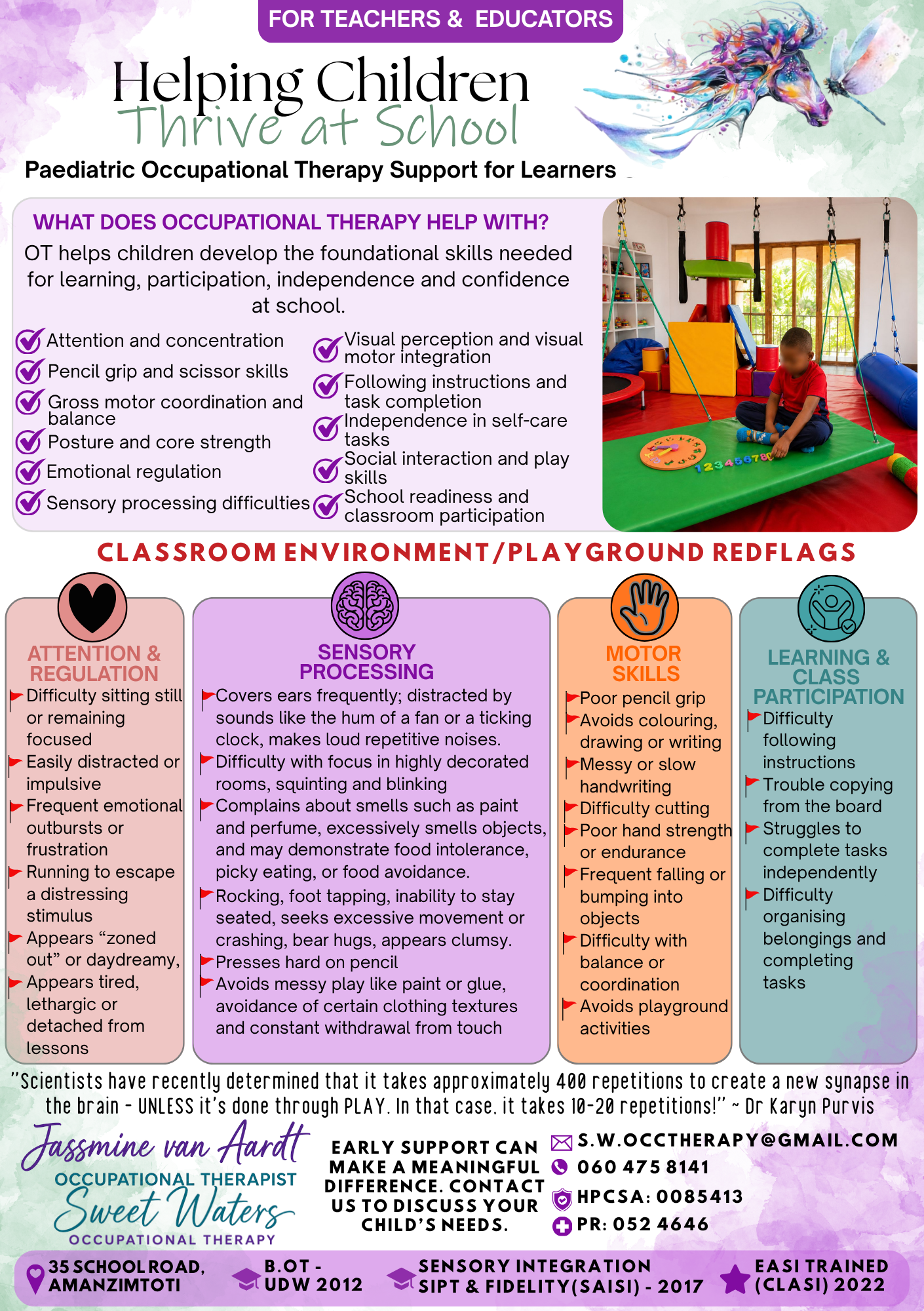
How OT supports learning at school
- OT helps children develop the foundational skills needed for learning, participation, independence and confidence at school — including attention, pencil grip, coordination, posture, emotional regulation, sensory processing, and classroom participation.
Attention & Regulation — classroom red flags
- Difficulty sitting still or remaining focused
- Easily distracted or impulsive
- Frequent emotional outbursts or frustration
- Running to escape a distressing stimulus
- Appears "zoned out" or daydreamy
- Appears tired, lethargic or detached from lessons
Sensory Processing — classroom red flags
- Covers ears frequently; distracted by sounds like a fan or ticking clock
- Difficulty with focus in highly decorated rooms, squinting and blinking
- Complains about smells; may demonstrate picky eating or food avoidance
- Rocking, foot tapping, seeks excessive movement or crashing
- Presses hard on pencil
- Avoids messy play, certain clothing textures, or touch
Motor Skills — classroom red flags
- Poor pencil grip
- Avoids colouring, drawing or writing
- Messy or slow handwriting
- Difficulty cutting
- Poor hand strength or endurance
- Frequent falling or bumping into objects
- Difficulty with balance or coordination
- Avoids playground activities
Learning & Class Participation — red flags
- Difficulty following instructions
- Trouble copying from the board
- Struggles to complete tasks independently
- Difficulty organising belongings and completing tasks
"Scientists have recently determined that it takes approximately 400 repetitions to create a new synapse in the brain — UNLESS it's done through PLAY. In that case, it takes 10–20 repetitions!" ~ Dr Karyn Purvis