
Resources
Helpful information for parents, caregivers and teachers about occupational therapy and sensory integration.
Jump to a section
Frequently Asked Questions
Sensory Processing & Regulation
Practical activities to help children feel calm, focused and ready to learn through movement and sensory input.
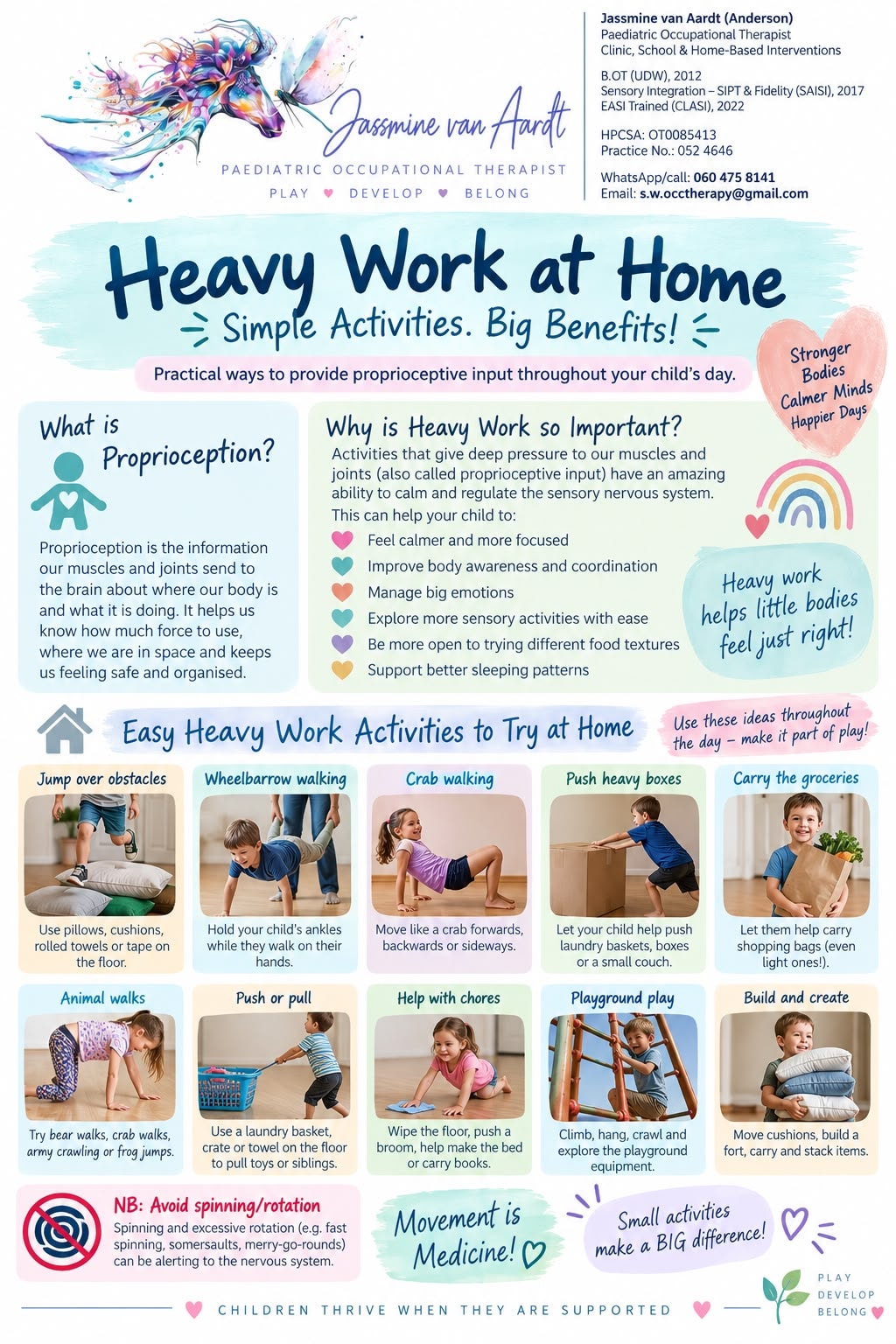
Proprioception / Heavy Work at Home — Simple Activities, Big Benefits
Proprioception is the information our muscles and joints send to the brain about where our body is and what it is doing. Heavy work activities — those that give deep pressure to muscles and joints — help children feel calmer and more focused, improve body awareness and coordination, manage big emotions, and support regulation and settling as part of a child's individual sensory routine.
Easy activities to try at home:
NB: Avoid spinning and excessive rotation — this can be alerting to the nervous system.
Download PDF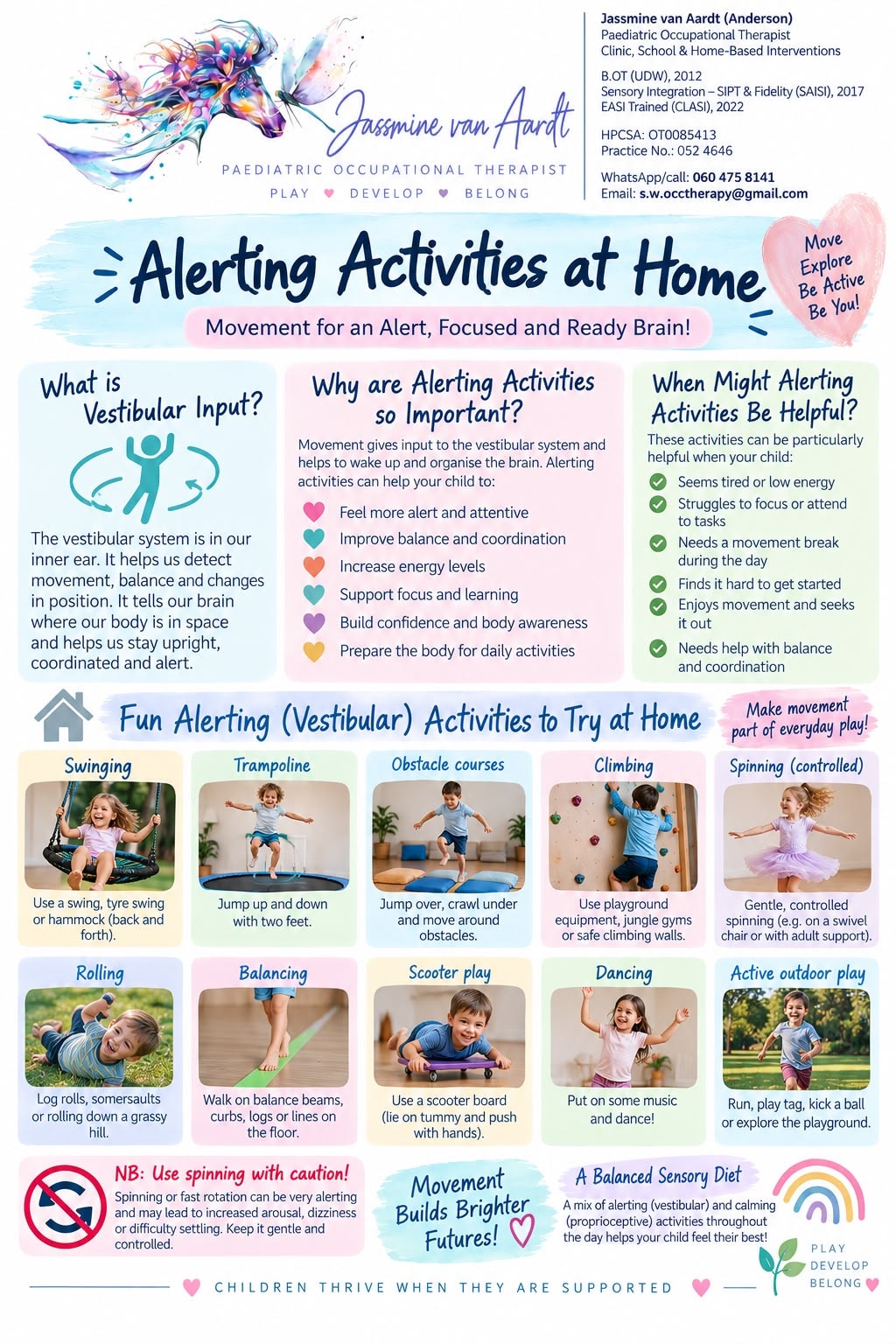
Alerting Activities at Home
Movement for an Alert, Focused and Ready Brain! The vestibular system is in our inner ear — it helps us detect movement, balance and changes in position. It tells our brain where our body is in space and helps us stay upright, coordinated and alert.
Fun alerting activities to try at home:
A Balanced Sensory Diet
A mix of alerting (vestibular) and calming (proprioceptive) activities throughout the day helps your child feel their best!
Motor Skills Development
Guides to help you understand and support your child's gross and fine motor development through everyday play and activities.
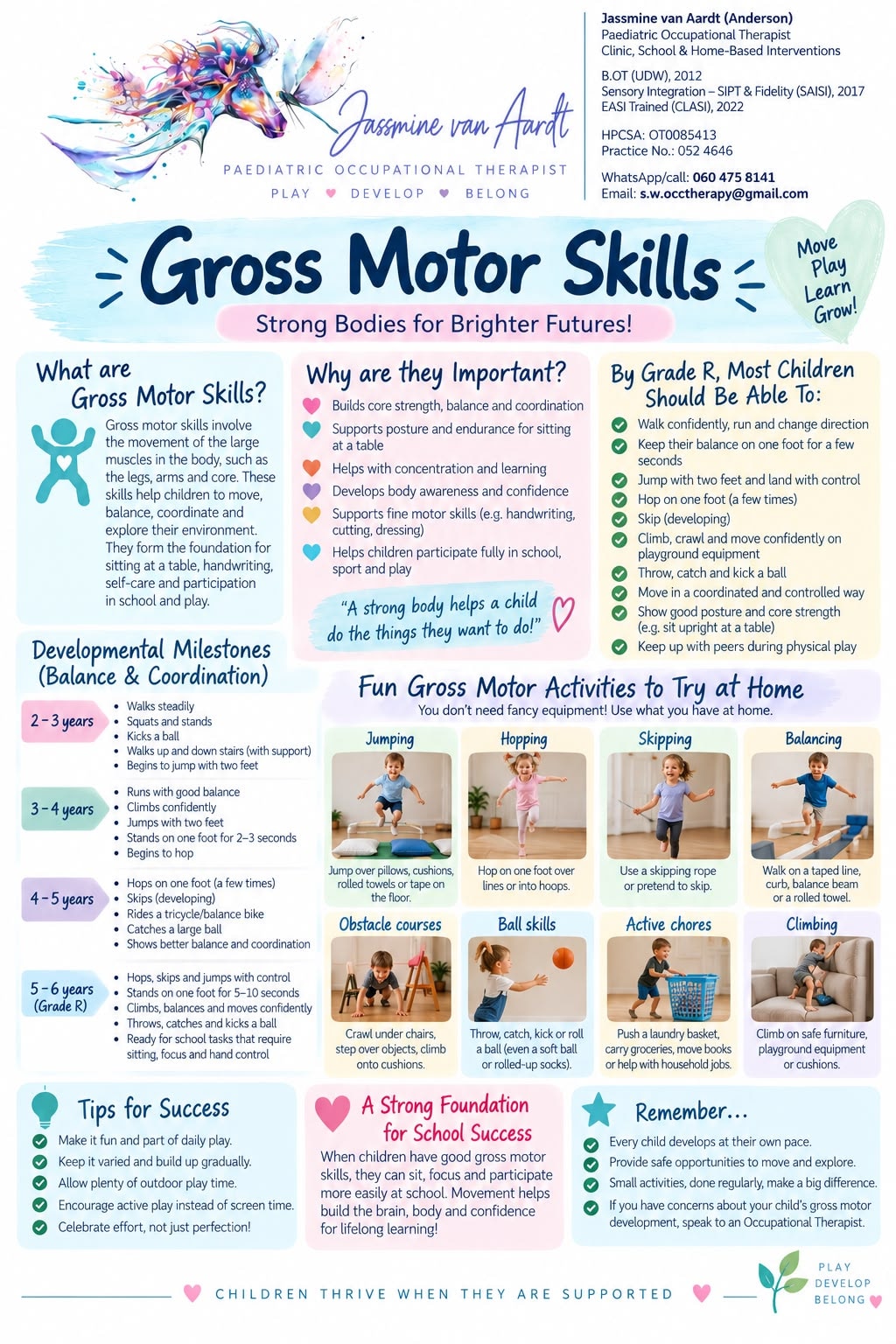
Gross Motor Skills — Strong Bodies for Brighter Futures
Gross motor skills involve the movement of the large muscles in the body — the legs, arms and core. These skills help children move, balance, coordinate and explore their environment. They form the foundation for sitting at a table, handwriting, self-care and participation in school and play.
Fun activities to try at home:
"A strong body helps a child do the things they want to do!"Download PDF
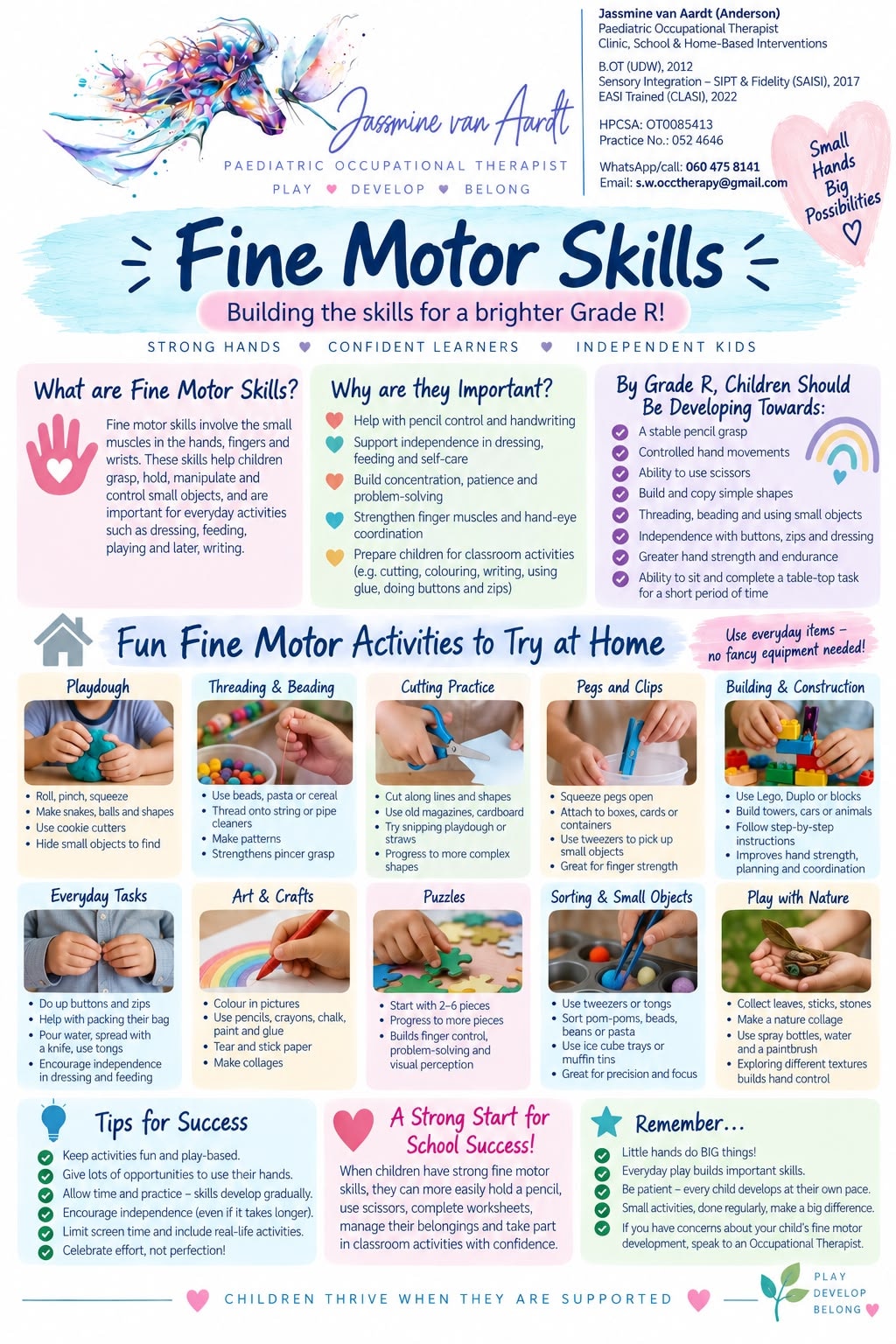
Fine Motor Skills — Small Hands, Big Possibilities
Fine motor skills involve the small muscles in the hands, fingers and wrists. These skills help children grasp, hold, manipulate and control small objects — and are essential for everyday activities such as dressing, feeding, playing and, later, writing.
Fun activities to try at home:
Little hands do BIG things! Everyday play builds important skills — be patient, every child develops at their own pace.Download PDF
Preparing for School
Step-by-step guides to help your child build the skills they need for a confident, happy start to Grade R and Grade 1.
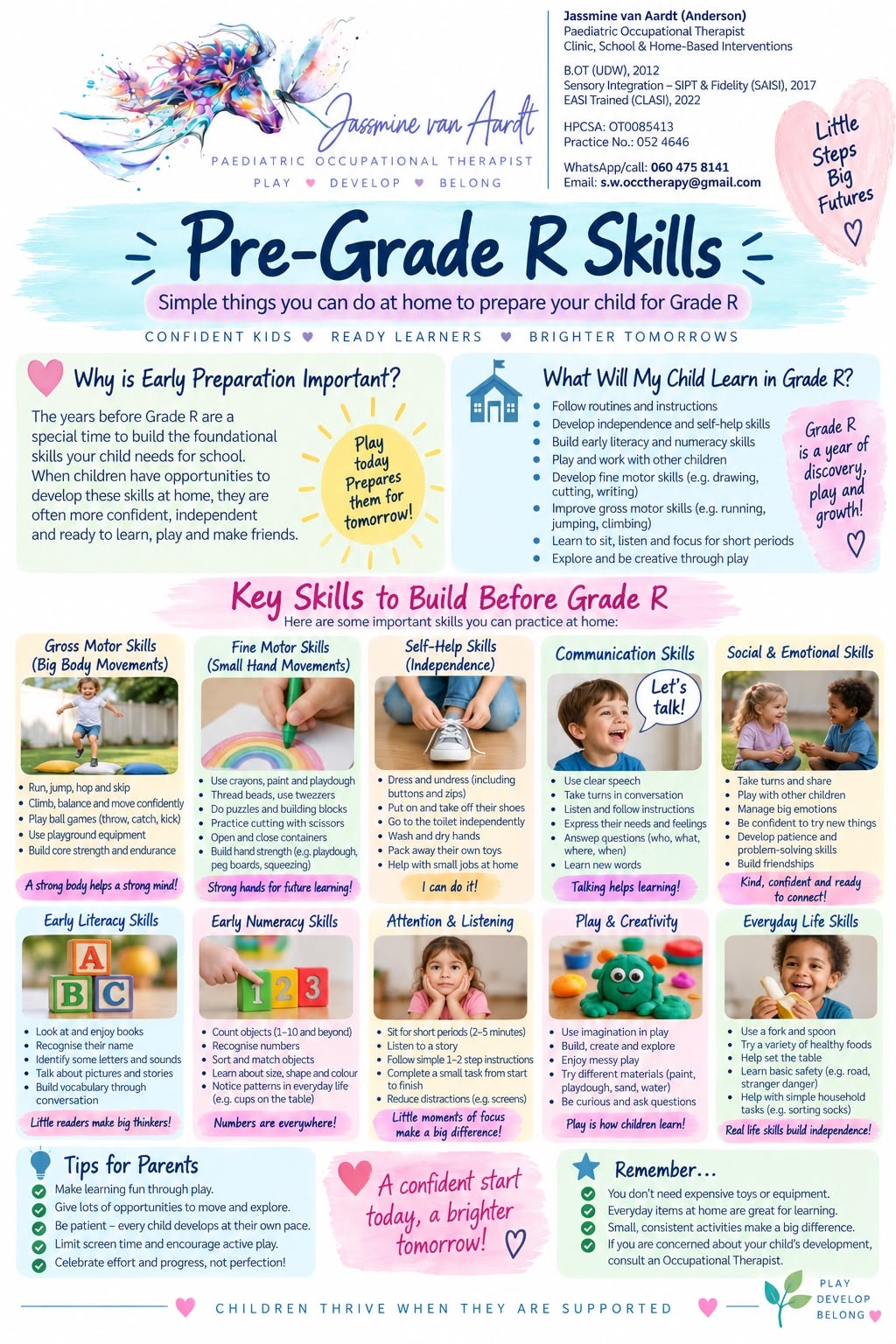
Preparing for Grade R — Key Skills to Build at Home
The years before Grade R are a special time to build the foundational skills your child needs for school. When children have opportunities to develop these skills at home, they are often more confident, independent, and ready to learn, play and make friends.
Key skill areas to focus on:
A confident start today, a brighter tomorrow!Download PDF
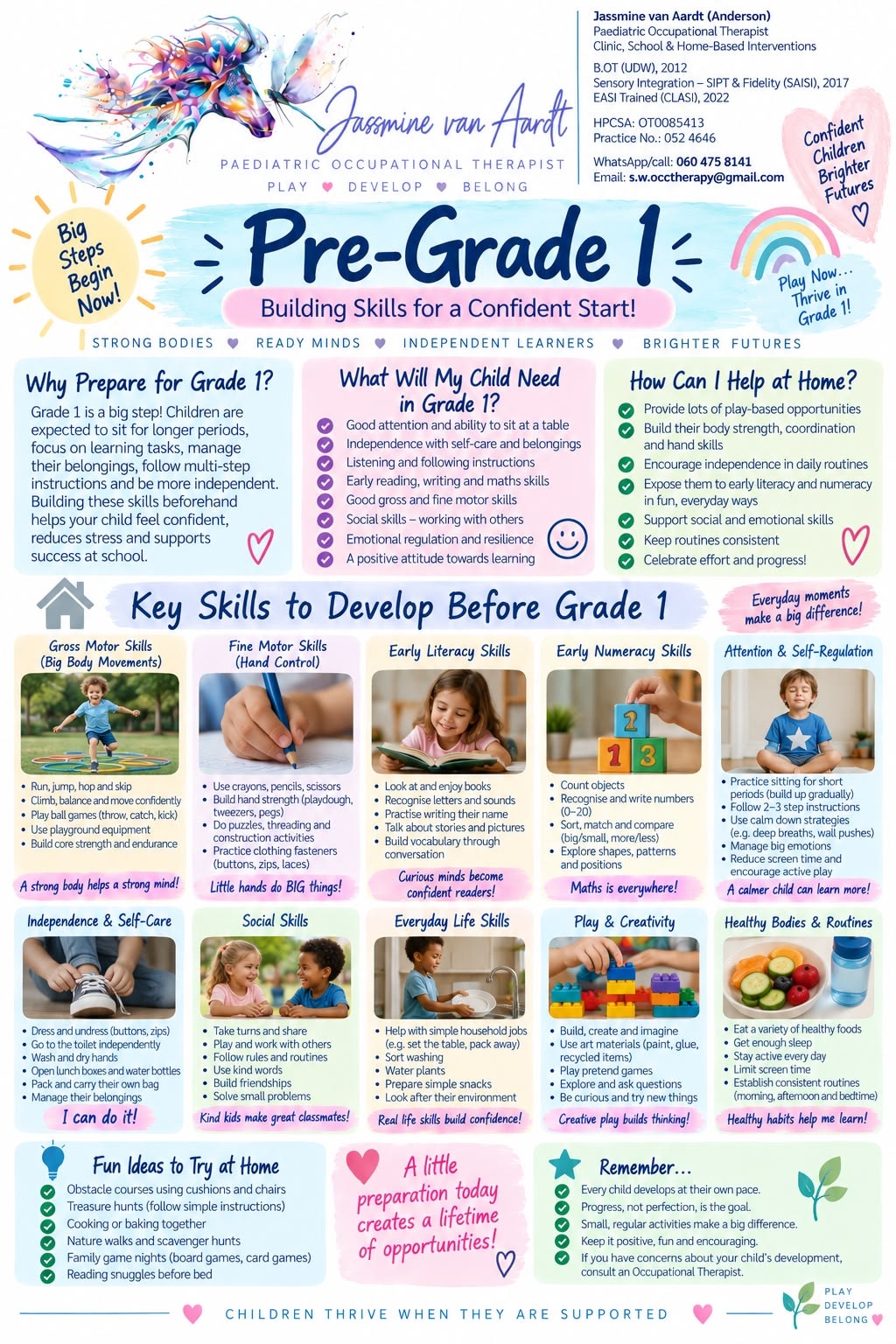
Pre-Grade 1 — Building Skills for a Confident Start
Grade 1 is a big step! Children are expected to sit for longer periods, focus on learning tasks, manage their belongings, follow multi-step instructions and be more independent. Building these skills beforehand helps your child feel confident, reduces stress and supports success at school.
Key skill areas to develop:
A little preparation today creates a lifetime of opportunities!Download PDF
Information for Parents
Everything you need to understand OT and make the most of your child's therapy journey — including how to claim back tax on therapy sessions.
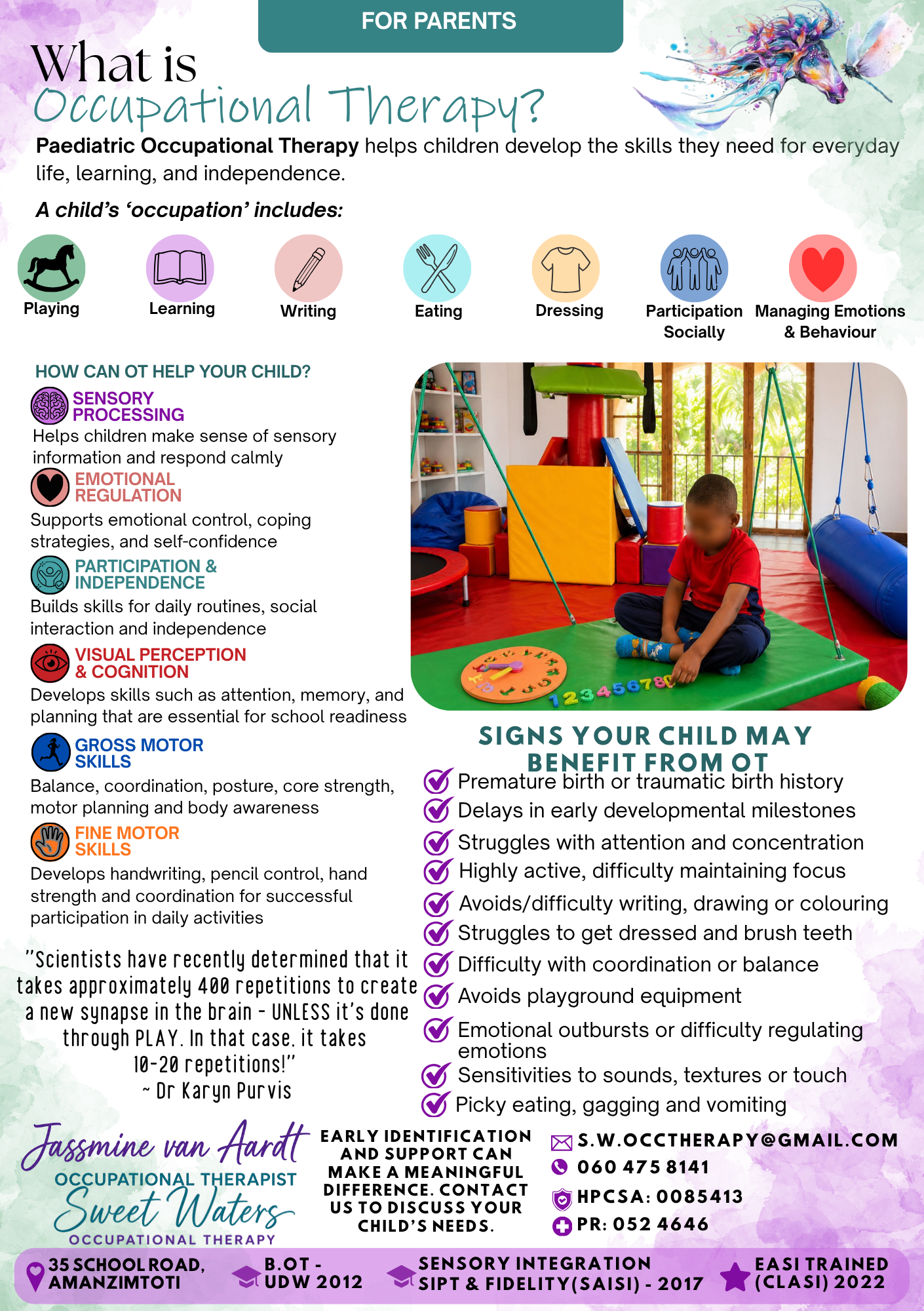
What is Occupational Therapy?
Paediatric Occupational Therapy helps children develop the skills they need for everyday life, learning, and independence — including playing, writing, eating, dressing, participating socially, and managing emotions and behaviour.
How OT can help your child
Sensory Processing — Helps children make sense of sensory information and respond calmly
Emotional Regulation — Supports emotional control, coping strategies, and self-confidence
Participation & Independence — Builds skills for daily routines, social interaction and independence
Visual Perception & Cognition — Develops attention, memory, and planning essential for school readiness
Gross Motor Skills — Balance, coordination, posture, core strength, motor planning and body awareness
Fine Motor Skills — Handwriting, pencil control, hand strength and coordination
Signs your child may benefit from OT
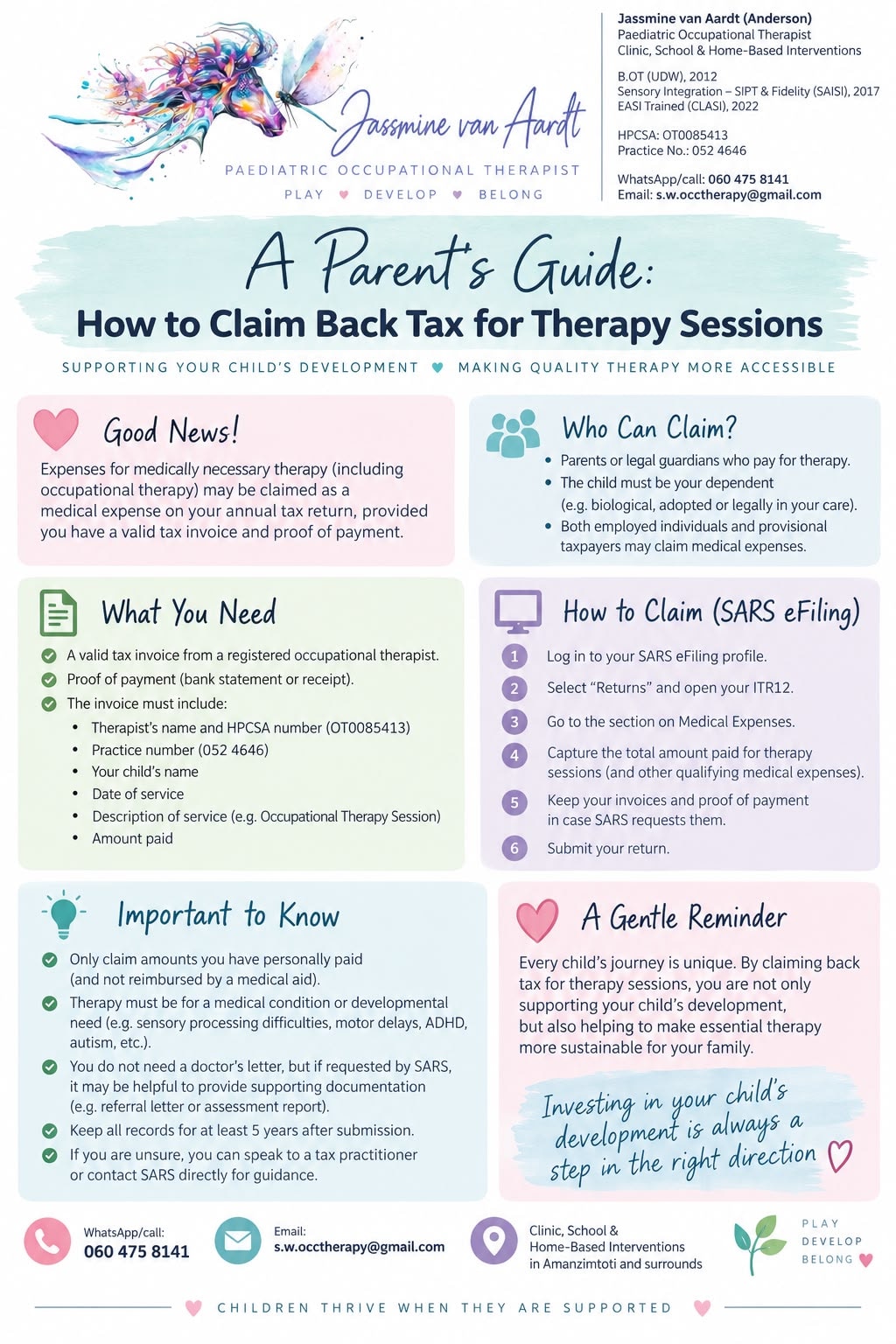
How to Claim Back Tax for Therapy Sessions
Expenses for medically necessary therapy — including occupational therapy — may be claimed as a medical expense on your annual tax return, provided you have a valid tax invoice and proof of payment.
How to claim via SARS eFiling:
Investing in your child's development is always a step in the right direction.Download PDF
Resources for Teachers & Educators
Classroom red flags, sensory and motor checklists, and practical guidance to help you identify and support children who may benefit from OT.
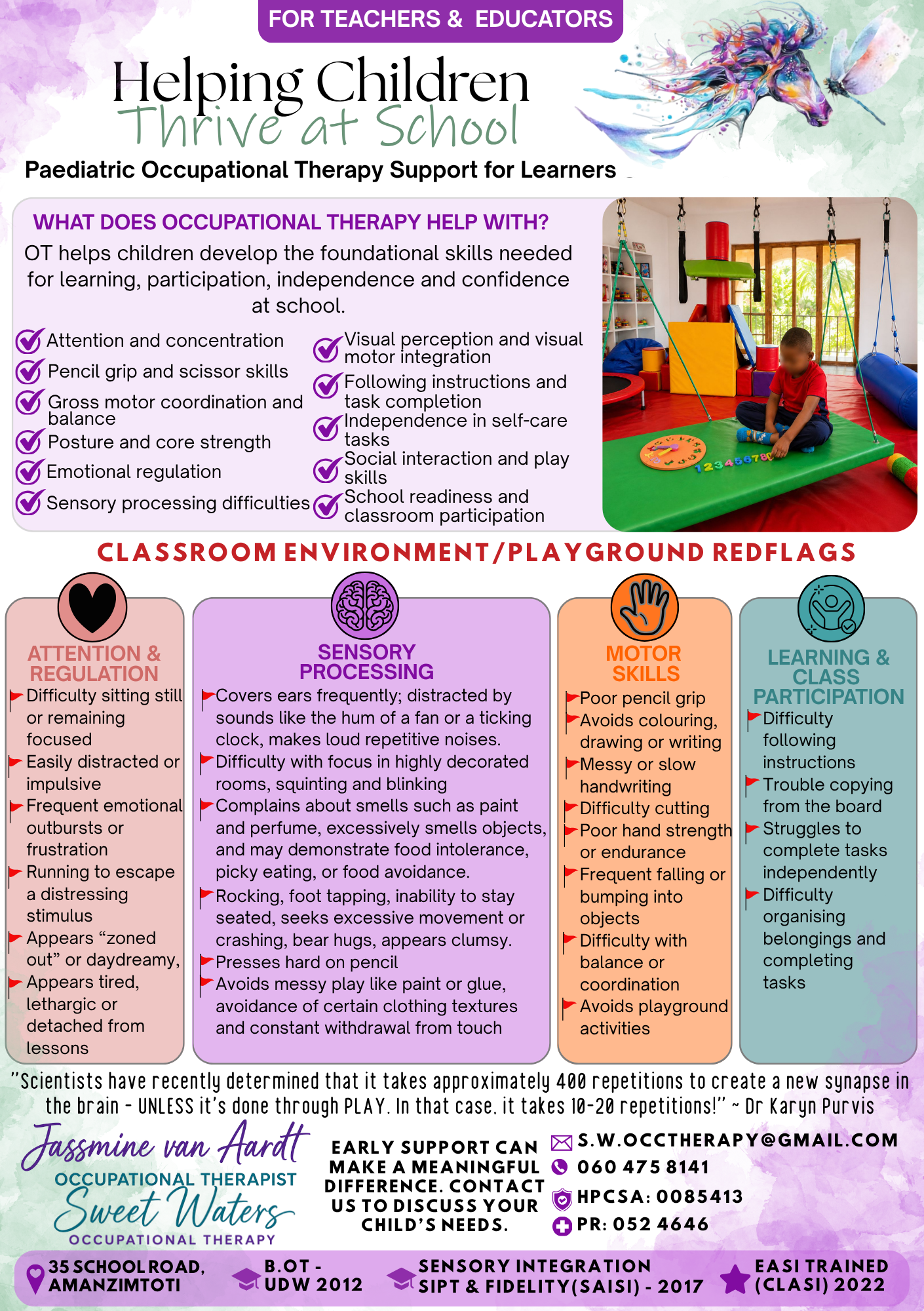
Helping Children Thrive at School
OT helps children develop the foundational skills needed for learning, participation, independence and confidence at school — including attention, pencil grip, coordination, posture, emotional regulation, sensory processing, and classroom participation.
Classroom & playground red flags
Attention & Regulation
Sensory Processing
Motor Skills
Learning & Class Participation
Children learn through meaningful, repeated experiences — and play provides a powerful way to practise new skills.Download PDF